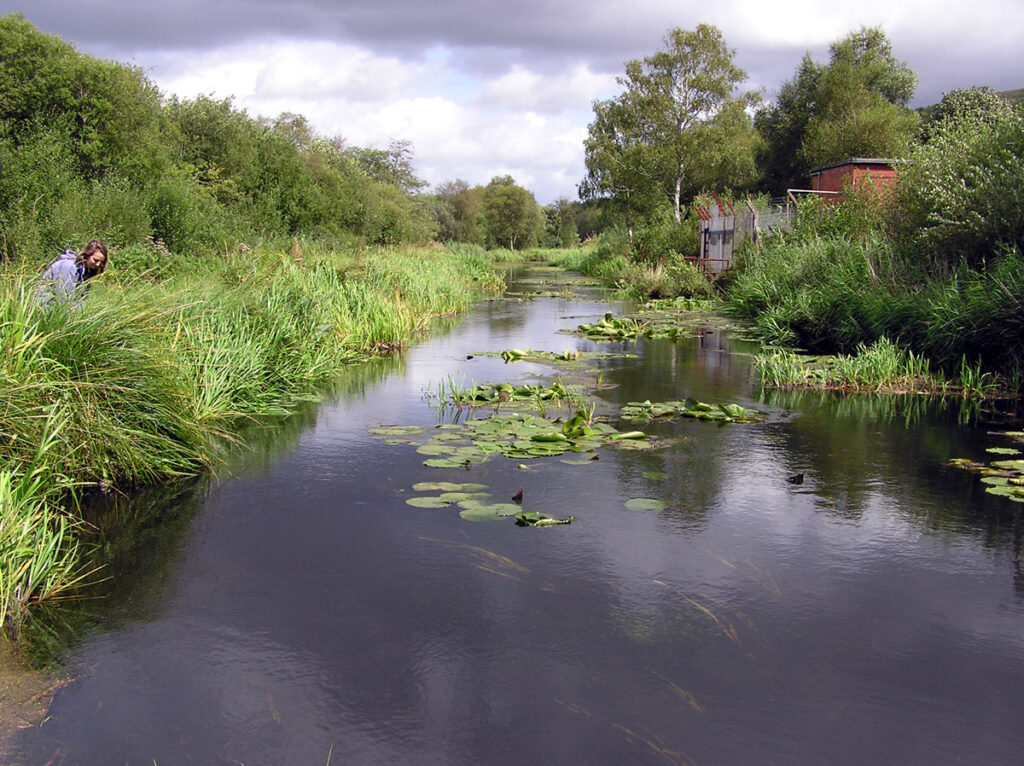
In May 2003 Dolomedes plantarius was discovered along a short section of the bank of the Tennant Canal where it forms the southern boundary of Pant-y-Sais National Nature Reserve (NNR), east of Swansea. In common with the English sites, this is a lowland water body fed by neutral to alkaline, base-rich water. Its important biodiversity is recognised in its designation as a Site of Importance for Nature Conservation (SINC 226).
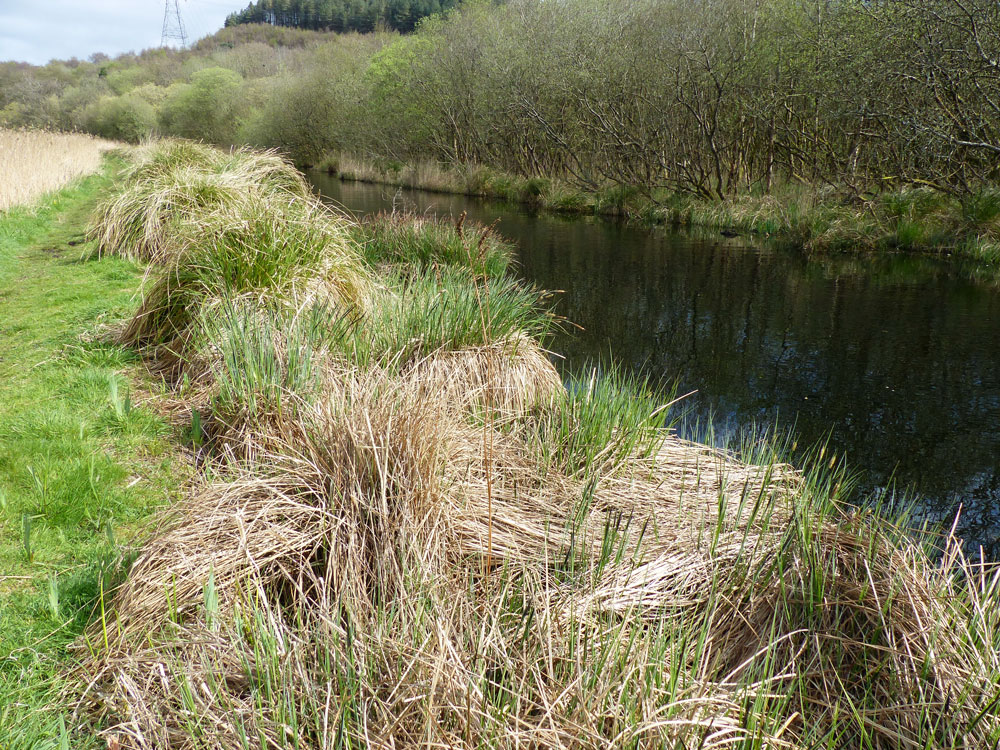
Open, stiff-leaved tussocks of Carex paniculata Tussock Sedge provide one of the main structures for nursery-web construction although webs are also found in other species including the less robust Glyceria maxima Reed Sweet-grass. Surveys show that the spiders occur along around 2.5km of the canal although densities are low and numbers appear to vary considerably between years.
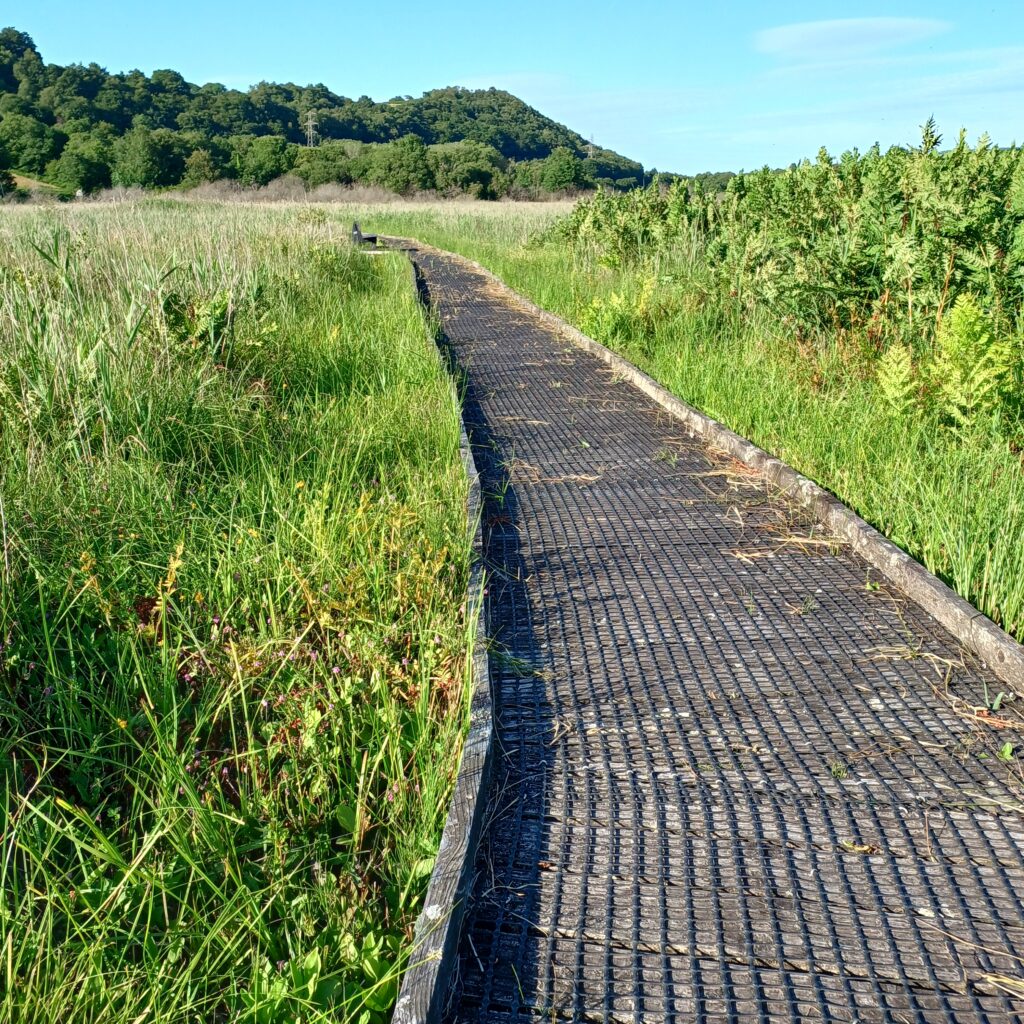
The spiders appear to be much less abundant in what appears to be very suitable vegetation in parts of the immediately adjacent Pant-y-Sais National Nature Reserve. Although they breed successfully there in wet years, their population is limited by the very small number of turf ponds deep enough to hold water throughout dry summers.
The Wildlife Trust of South & West Wales’ Red Jacket Fen nature reserve, adjoining the canal a little further to the east, also has occasional records of D. plantarius. However, a lack of regular and systematic survey means that the extent or permanence of any population there remains unclear.
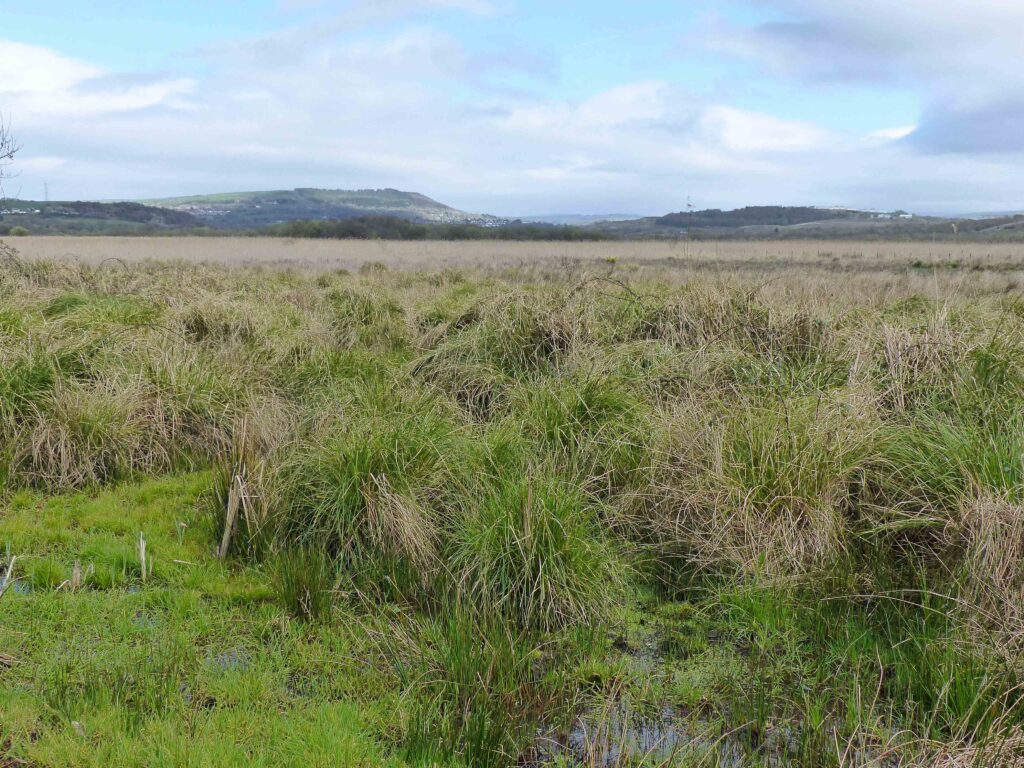
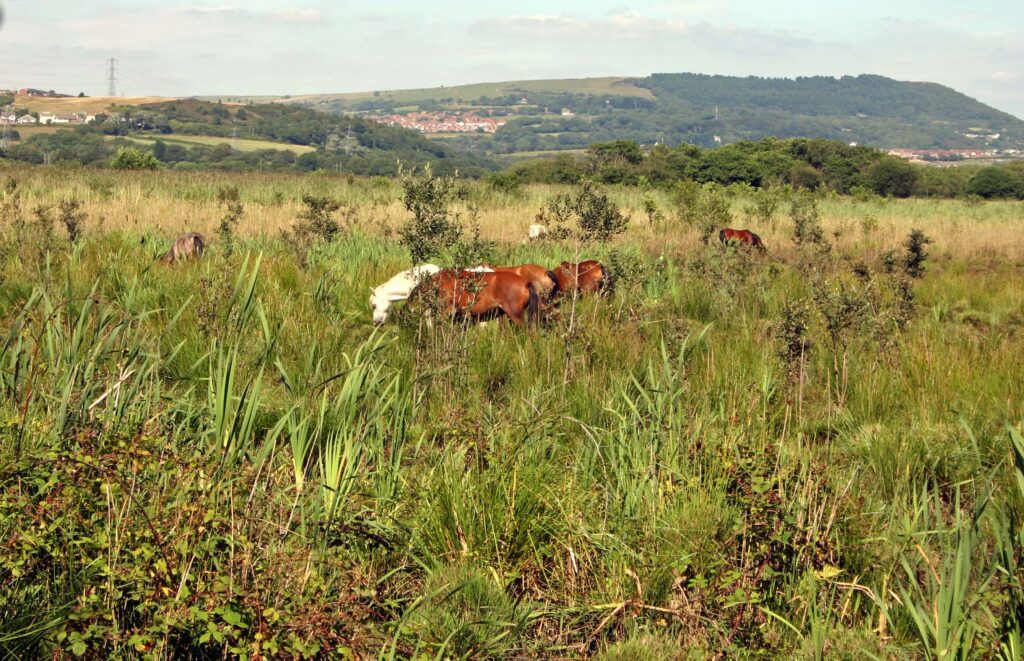
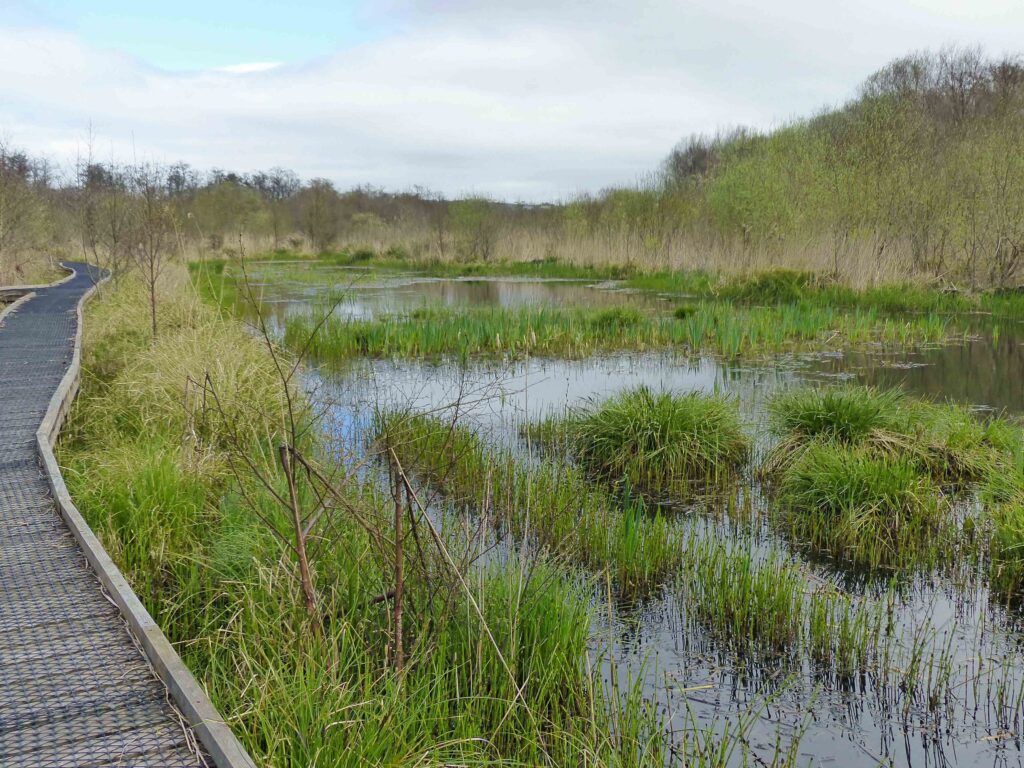
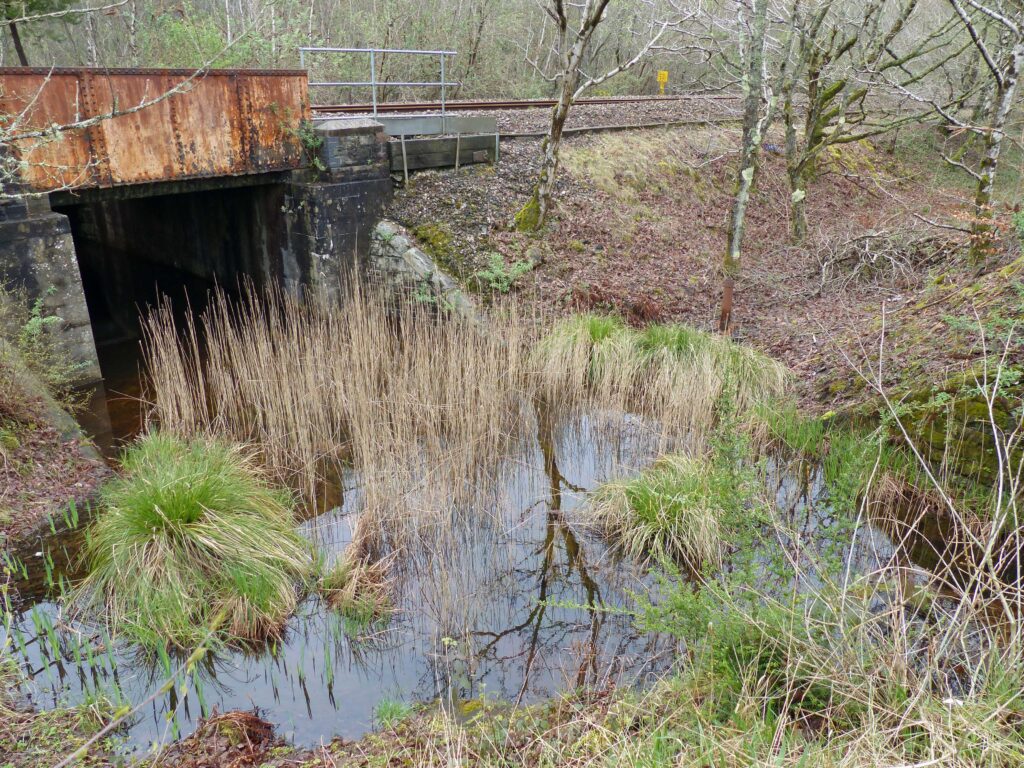
Dolomedes plantarius also occurs in Crymlyn Bog NNR (Robertson 2000) further west along the course of the Canal, and linked to it by the Glan-y-Wern Canal which runs north through the Bog. The full extent of the population at this site is not yet known because the depth of wet peat makes survey work both difficult and dangerous. Surveys commissioned by the Countryside Council for Wales (now NRW) in 2003, 2004 and 2006 (Clark & Clark 2003, Clark 2004, Gallon 2007) showed that D. plantarius was present in at least four areas within Crymlyn Bog during this period. It has been searched for, and found, in three of them since then and in one additional area. The present connectivity between these apparent sub-populations of D. plantarius on the Tennant Canal and within the Crymlyn Bog is unknown but is being investiagted through a genomics study by Anna Maka as part of her PhD at the University of Nottingham during 2026/2027.
Crymlyn Bog has undergone relatively rapid habitat change. Negative changes have included the encroachment of scrub and of Phragmites australis Common Reed on formerly open areas of diverse fen vegetation. This is likely to have severely fragmented a D. plantarius population that was formerly well connected throughout the area’s fens: the construction of the canal network to serve the local collieries and industries in the late 18th and early 19th Centuries is likely to have facilitated the species’ dispersal, particualrly since mid-1930s when navigational use declined. The Tennant canal has since been used as a water source for industries in Baglan Bay but its Glan-y-Wern and Tir-Isaf branches have become overgrown with blocking emergent vegetation and scrub. The introduction of pony grazing to Crymlyn Bog in the early 2000s, and the clearance of dense areas of scrub, is starting to reverse these trends, successfully opening-up some areas and restoring a richer and more structurally diverse fen flora. Some additional areas of open standing water have been created by excavation and are mainatined by rotational vegetation clearance.
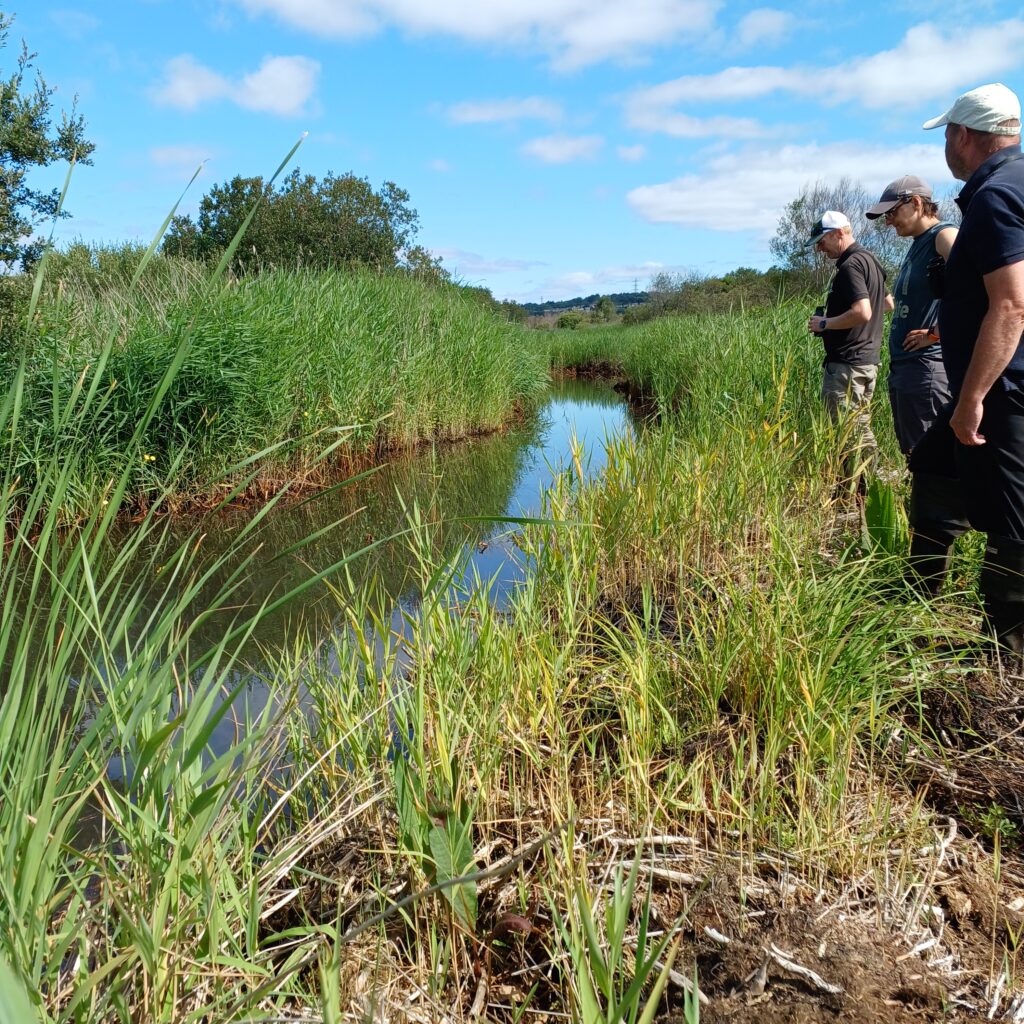
Most recently, funded by the EU and supported by the Welsh government, Crymlyn Bog has benefitted from the five-year LIFEquake programme which aims to restore peatland, quaking bogs and their wider supporting wetland landscapes to favourable conservation status. At Crymlyn, work included clearance of scrub along the length of the arterial Glan-y-Wern Canal, substantially improving its quality for aquatic species at the same time as increasing aquatic connectivity through the reserve.
A survey commissioned by CCW* in 2001 looked unsuccessfully for evidence of D. plantarius in the extensive grazing marsh ditch systems of the Gwent Levels, further east on the coast of South Wales. A search of suitable habitat in Swansea Vale in 2003 was also unproductive (Gallon 2001).
References
Gallon, R. C. 2001. Survey of the Gwent Levels wetland reserve for the fen raft spider Dolomedes plantarius. CCW Contract Science Number 489. Countryside Council for Wales*, Glamorgan.
Robertson, J. 2000. Crymlym Bog NNR, Glamorgan. British Wildlife 12: 22-27.
* now Natural resources Wales (NRW)